2025-10-30
Environmental Monitoring in the Aluminium Industry
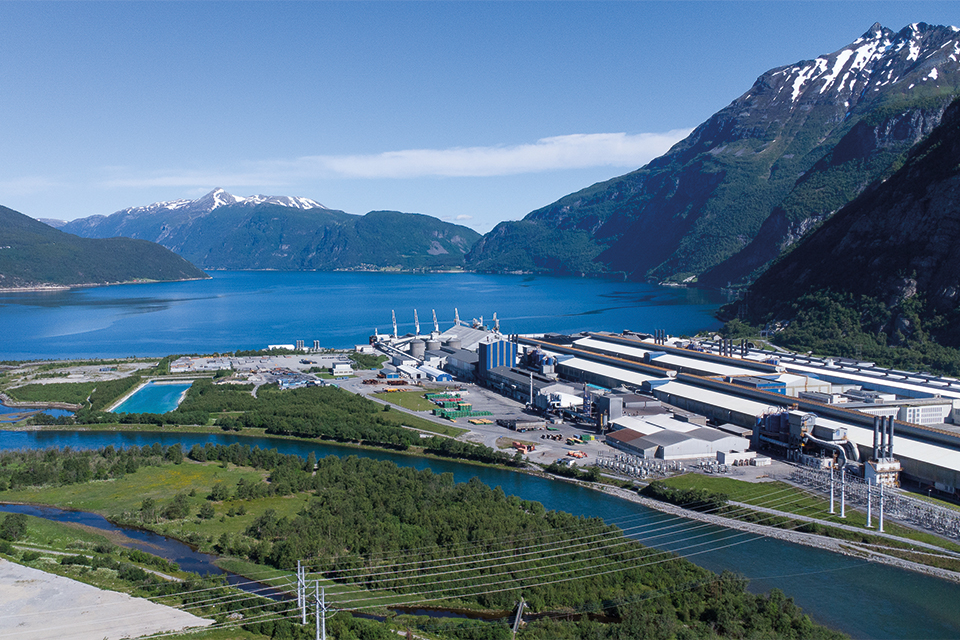
Aluminium is very suitable for recycling and remelting into new aluminium products, but there is also a lot of new production. In the latter case, aluminium is mainly extracted from the mineral bauxite.
In a first step towards metallic aluminium, bauxite is ground and mixed with sodium hydroxide and exposed to pressure and high heat. The result is aluminium oxide, also called alumina. In a second step, the alumina is subjected to electrolysis in a bath (a “pot”) of fluoride compounds at high temperatures. This releases and extracts the pure aluminium metal. The electrolysis is carried out using carbon anodes, where the oxygen in the aluminium oxide accumulates, and carbon monoxide (CO) and carbon dioxide (CO2) are formed. In addition, high levels of other air pollutants such as nitrogen dioxide (NO2), sulfur dioxide (SO2), and hydrogen fluoride (HF) are usually formed.
The electrolysis process is very energy-intensive, and the second stage of aluminium extraction is therefore often located in countries where electricity production is not too expensive.
The Issue with HF
Any type of air pollution is of course a problem, but in the aluminium industry, HF is probably the biggest concern. HF is extremely reactive and can easily etch glass. When combined with water, it forms a highly corrosive and toxic acid that quickly burns skin and can causes blindness and build-up fluid in the lungs.
High levels of HF are literally lethal. From a health and safety point of view, it is therefore important to monitor the HF levels in connection with the production process, but it is also of interest to measure emissions of HF to the environment. Such emissions can occur both via flue gas ducts and in the form of diffuse emissions through the roof ventilation of the pot rooms.
HF Monitoring
Measuring HF levels or concentrations of other pollutants in a pot room is not easy. The instruments must be able to operate in high temperatures and at high dust levels. On top of that, very strong electromagnetic fields can disrupt sensitive electronics.
However, the solution to the challenge of monitoring HF levels is available from OPSIS, primarily in the form of the laser diode-based LD500 analyser. It can be used to measure both high levels in flue gas ducts and lower levels in the air inside or outside the pot room. The same analyser can be used for both tasks simultaneously.
An optical fibre carries the laser light from the LD500 to a transmitter unit. There, an open beam of light is sent out towards a receiver. A passive reflector is usually deployed, allowing the emitter and receiver to be combined in a single unit. A detector is located in the receiver, and the signal from this is led via another optical fibre back to the LD500 where the light absorption can be recorded and the levels of HF calculated.
Thanks to the optical fibre cables, the sensitive electronics in the analyser can be separated from the strong magnetic fields and the otherwise harsh environment in the pot rooms. The cables can be several hundred metres long. The fibre cables also make it possible to multiplex the measurements, i.e. have the same LD500 measure the HF levels along two or more light paths, sometimes even in different pot rooms. This provides a very simple, cost-effective and reliable solution.
…And More
Gas analysers from OPSIS can also monitor other air pollutants that occur in the aluminium industry. NO2 and SO2 levels are commonly monitored, but it is also possible to measure other substances, both in the emissions and in the ambient air.
Please contact OPSIS or either of its representatives, and we will help you find the best solution for monitoring emissions or air quality in your specific industry!